
Nothing “a short history of decay” Album Review
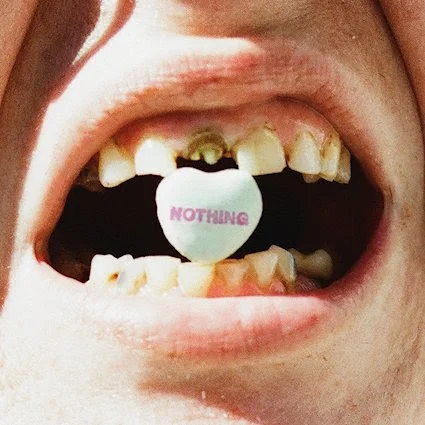
a short history of decay is the most poignant album from Nothing, to date. Released via Run for Cover Records, and following in the footsteps of The Great Dismal and a post-metal split album with Full of Hell, the Pennsylvanian shoegaze band blend together an array or urgent and soothing sounds to create something truly unique. a short history of decay is an album of haze and the honesty that clears it. It is an album of overwhelming guitar and stripped-back, quiet moments. It is born out of memories of home, people you used to know, the future that scares you, and the past you’re worried doesn’t.
The album opens with never come never morning. Right out the gates, the song hits us with sentimentality, both in nostalgia and trauma. We feel the past well up in the lyrics, driven by the often repeated “when I was young.” The words are strained by memories of abuse, but conversely boosted by a longing for simplicity. It is through these conflicting feelings that we
being to see the album’s honesty and ambivalence. never come never morning teaches us that the album is committed to a vulnerability not seen before by Nothing. Where The Great Dismal is often quite broad about its themes of survival, a short history of decay dares to be personal to a fault. Lead singer Domenic “Nicky” Palermo has written these lyrics as a response to his life; the years of intense touring, the honesty he finds in himself, and his essential tremors condition. It becomes increasingly clear in Palermo’s lyrics, that he wants us to believe we are breaking down the more that we grow.
Whilst a brief history of decay certainly feels like a cohesive album, with a strong flow between sounds and emotions, it is driven by its severe ambivalence. This tension is present, not only in the lyrics, but sonically too. a brief history of decay is a tug of war between frustrated, noisy songs, and bleak, atmospheric songs. One minute you’ll be listening to grating electronics and urgent siren-like sounds in cannibal world, and the next you’ll be listening to haunting strings and plucky harp in purple strings. It strikes an impressive balance between the two ends of the spectrum, and it serves the emotional storytelling of the album really well. The album makes you wallow and then scream and then lose yourself and then grit your teeth, back and forth from its start to its finish, and it all works so incredibly well.
For the softer side of a brief history of decay, we’re looking at songs like the rain don’t care, purple strings, ballet of a traitor and nerve scales. Each one brings its own, unmistakable identity to the album. I have already briefly mentioned purple strings, Nothing’s second single, which boasts sinister strings, brooding lyrics, and a contemplative ebb and flow. For me, this song is the epitome of the album’s conflict, trying to find a way to make sense and push on despite the decay in your life. The song wants to lose itself in lies of being ok, looking at “self hypnosis,” a “half burned note,” “time travel,” but for all its pondering, the song does not have much to show for itself aside from its own hurt. ballet of a traitor pushes this further, lulling us into an echoey daze, admitting that “worst of all, we created hope,” reminding us that the things that look the sweetest can sometimes hurt us the most in the end. And then the rain don’t care feels like being part of an endlessly falling rain. It feels so deeply nostalgic it becomes transcendent, and Palermo’s singing is so calm and angelic you often find yourself forgetting it is a voice at all, and not just another instrument. Towards the end of the album, nerve scales refutes the sadness of its partners, with drums and tambourine to keep the song moving, and a rising ambience that builds up until it breaks and all the tension comes crashing down.
And for the harsher side of this album, we’re listening to cannibal world, a short history of decay and toothless coal. Out the gate, cannibal world is a shot of adrenaline. The quick drums and the droning guitar demand attention, and they build to a payoff of warning sounds. It is no surprise that its lyrics are more decisive and minimal to contribute to the increased pace. toothless coal, the final single, escalates the urgency, with a look at the external world, “burning at the stake,” and our concerning reaction to it, “laughing at the flames.” It seems to suggest that only those who embrace decay are able to live with it, a frustrated sentiment. The goal of a short history of decay, the title track, is similar; to overwhelm the listener. It is in a constant battle with us, drowning its own vocals, desperately asking us “have you seen my friend?” again and again. It is non-stop fuzz.
After all of this, essential tremors concludes the album by taking us all the way back to the start. It has the same images of home, a nostalgic guitar, quiet memories underpinned by longing. But essential tremors challenges its own looping nature, knowing it is closer to the end of something than the start, perhaps mirroring Palermo’s own internal worries. Clearer than any other song, we can hear Palermo’s tremors in his voice. He gives us no option but to confront the discomfort. He shows us what it looks like to “[wrestle] with [himself].” The song then builds to an end that is throttled by noise, but satisfying in the persistence of its drums and guitar, and the acceptance in Palermo’s voice.
It is no wonder that Palermo has described a short history of decay as feeling like a “final chapter,” a conclusion to ideas that have permeated throughout all of their albums, but I think Nothing wants us to find solace through accepting this conclusion. And I think they want us to find solace in knowing that Nothing will continue, despite the hardship faced.